In 2006, Keri Kilgore was looking for a position as a dental hygienist. She saw an ad for a position at Chester County Community Dental Services in Coatesville. In 2014, Community Dental merged with ChesPenn and we acquired a passionate, gifted Public Health Dental Hygiene Practitioner.
Keri found that providing dental care in a community health setting was profoundly different from working in private practice. In her words, “It was a culture shock. It took me about three months So many patients have never seen a dentist and come in with severe dental disease. Many patients have physical or mental disabilities. “I couldn’t believe the conditions that patients were coming in with – so many problems all at once and in pain and just needing almost a reconstruction. We would have to start with a palliative approach and transition them to restorative care. “It’s really satisfying if they’re willing to take the time to let us help them. When they come through the other side it’s amazing because their confidence is higher their health is better.”
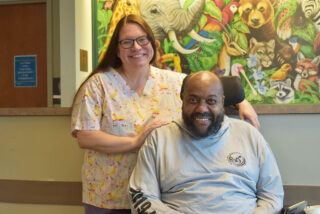
The challenges are often great, but the rewards are even greater. Geno Henderson is a perfect example. Geno has been seeing Keri since 2007. He is a veteran who receives his medical care at the Coatesville Veteran’s Association Hospital. However, the local VA does not have a dental practice so to receive dental care through his VA benefits, Geno would have to travel to Philadelphia. That’s inconvenient for any Coatesville resident, but Geno is confined to a wheelchair, making the trip even more difficult. Like many veterans living in our community, Geno comes to ChesPenn for his dental care and uses our sliding fee discount.
When Geno first came to us, he was able with help to get out of his wheelchair and into the dental chair, but it could take as much as 15 minutes to make the transfer. Over the years, his disability has progressed and now Keri provides his cleanings directly in his wheelchair. That requires her to stand and also requires some creativity in taking his x-rays. But it’s more important than ever because Geno can no longer brush and floss thoroughly as he once did. He comes for cleanings now every 3 months to compensate. Geno and Keri have developed a warm relationship over the years and he trusts her to care for him and to make his visits comfortable. During a recent visit, he told us, “Everyone here is wonderful. Keri takes great care of me!”
Many of Keri’s patients have severe anxiety during their first visit. They’re worried that their care will hurt and that they might be judged for not taking better care of their teeth and gums. Keri’s approach is to praise them for having the courage to come. She also tells them, “This is going to be the hardest visit. We’ll get through it together and after that it will be easy.”
Over the years, we have been happy to see more families bringing their children in when they’re very young. Often the youngest in a family will watch as an older sibling has an exam and cleaning and realize that there is nothing to be afraid of. We use dental puppets to teach and entertain young children and they get a prize as they leave. They learn to look forward to their visit instead of being afraid. One patient who came in for his first visit at 3, later brought Keri a plush Minion for Christmas.
The dental visit can be much more than about comfort and appearance – it can be lifesaving. Keri has identified cancerous lesions and other critical health issues. One patient’s x-rays showed an extraordinary loss of bone in her lower jaw. The woman was only 19, yet her jaw was so fragile that it could easily have shattered. Keri referred the patient to an oral surgeon and later learned that she had been diagnosed with an ameloblastoma, a rare benign tumor that can completely destroy the jaw. The patient has since had reconstructive surgery.
Keri’s story demonstrates the critical importance of dental care in public health and the value of offering medical and dental services under one roof. This kind of quality, integrated care delivered by people who are passionate about their work is a hallmark of community health centers.
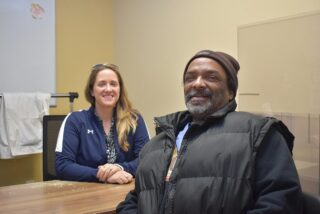 One of ChesPenn’s most important health education initiatives is our Smoking Cessation Program. ChesPenn Community Health Educator Tina Beahm recently sat down with patient John Cornin to talk about his success in overcoming his smoking addiction. John has been a patient at Upper Darby since we opened in 2009. Two and a half years ago, he expressed a desire to get help with his smoking and his physician referred him to Tina. Tina offered him a choice of nicotine replacement methods – gum, patches, or lozenges – and he found that the lozenges helped him most.
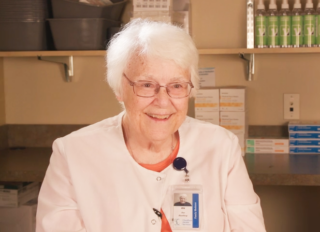 In 2007, after 40 years working as a nurse, Sue Ramberg was ready to retire. The changes she had seen in the healthcare system had robbed her work of the joy she had once felt. She shared her plans with the late Dr. Rekha Yagnik, ChesPenn’s founding pediatrician and Medical Director, who immediately replied, “Now you can come to work for me!” Sue tried to resist. She felt that she was ready to be done, but Dr. Yagnik had a better idea. She stopped by Sue’s office every day until Sue finally gave in. “I said ,‘If I give you a year will you leave me alone,’ and she said yes,” she remembers. “At the end of my year she came to my desk and said, ‘Can we have one more?’ She was so amazing that I couldn’t say no.” Eventually Sue let Dr. Yagnik know that she would stay as long as ChesPenn needed her.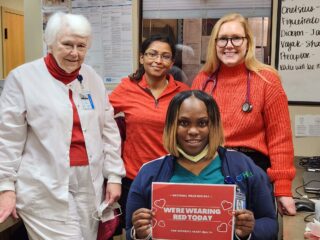
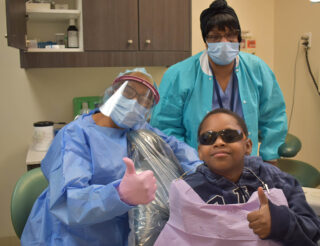
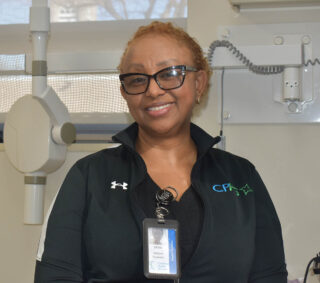 When we go to our dentist’s office, most of us understand the roles the dentist, dental hygienist, and dental assistant play, but there is also one more member of the team whose skill set enhances the dental team’s ability to help their patients. The Expanded Function Dental Assistant, or EFDA, places fillings, fits dentures, applies fluoride and sealants, and polishes teeth to complete a dental cleaning. By performing these essential services, the EFDA frees the dentist and hygienist to move on to additional patients, ensuring great care for more patients each day while keeping costs under control. A great EFDA contributes to a pleasant dental visit for the patient. That can be especially important with little patients, who learn to feel safe or afraid at the dentist’s office in their early years.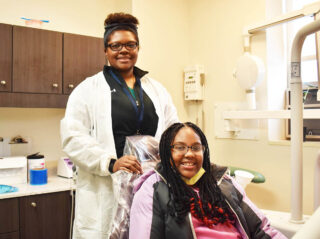
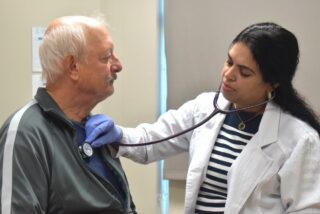
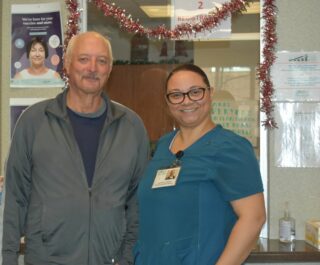 medical care and he made an appointment with Josemi Josef, our Nurse Practitioner. He shared that before coming to ChesPenn he hadn’t really seen a physician for many years. His philosophy was that good health meant eating right, getting good exercise including cardio and strength training, meditating, and having an interest in life. He’s since added seeing his family medicine physician regularly. He was anxious at first about seeing a new provider, but over his first few visits he and Josemi built a rapport and he was comfortable following her recommendations for managing his hypertension.